Espenson Brings ‘Once Upon A Time’ to a New Level

I know I talked about Once Upon A Time not that long ago, but after last night’s incredible episode I can’t help but bring it up again, especially to talk about how Jane Espenson‘s writing is this show’s redemption.

First of all, we finally get to learn more about Frankenstein, and Henry actually says something meaningful again, expressing what all of the viewers are thinking: “Frankenstein isn’t in here. It’s not even a fairy tale!” Hopefully the fact that someone in the show finally sees Dr. Whale/Frankenstein’s presence as strange means that this incongruity will soon be explored.

“In the Name of the Brother” seems like a completely different show, rife with witty dialogue and clever quips as opposed to unnatural, awkwardly delivered lines. The entrance of the “outside” world into Storybrooke allowed Espenson to inject her characteristic referential humor into a show that has been bland for quite some time, throwing in a Star Wars ringtone, a joke about posting pictures of food to Twitter, and worries about outsiders wanting to experiment on Storybrooke’s magic inhabitants like in the movies E.T. and Splash.

Not only that, all of the characters seem to have, well, more character in this episode. Mary Margaret’s pluck seen previously in some of her Fairy Tale World exploits is revived, especially in one cheeky aside about the doctor:  “Does anybody else notice that he’s drunk off his ass?” Rumpelstiltskin is also given some particularly biting dialogue, bringing back some of that acerbity that we all so loved in his character in the first season.

Another Espenson staple, no doubt fostered by her time on the Joss Whedon shows Buffy the Vampire Slayer, Angel, and Firefly, is the supurb–and superbly funny–ensemble scenes. As I’m sure any of you screenwriters out there know, ensemble scenes are exceedingly difficult to write. You need to have the correct balance of participation among all those present, not leaving any characters by the wayside with little or no presence in the scene, otherwise they might as well not be there at all. But on the other hand, no character should speak unless it is truly in their character to interject at that point.

Both Espenson and Whedon are extremely adept at maintaining this balance, and Espenson definitely displays her skill in last night’s Once. There are far too many examples to list here, and if you haven’t seen the episode yet, I don’t want give away too much and keep you from enjoying it as much as I did. But I’ll just give you one classic example of the quick, sharp group dialogue, as they are trying to figure out where the doctor has gone:

CHARMING
Got the scent?

RED
Boozy.

EMMA
Just find him and bring him back. We’ll watch Hook and figure out options if Whale doesn’t come back.

EMMA
Maybe Doc can do it.

GRUMPY
(uncontrollable laughter)
Surgery?!
(a beat)
No!!

SNOW
Maybe he didn’t even run. Maybe Cora grabbed him for some reason.

CHARMING
I don’t think so. He’s been a rough place since he brought Regina’s fiance back to life.

SNOW
Daniel?

EMMA
Back to life?!

CHARMING
And had his arm ripped off and put back on.

GRUMPY
Cool.

SNOW
Wait, Daniel came back?

EMMA
Like some kind of Frankenstein?

CHARMING
That’s Whale. The Doctor. And Daniel was his…

EMMA
What went on here while we were gone??

CHARMING
(exhausted groan)

A testament to the excellence of this episode is the fact that it was trending worldwide on Twitter as it aired, which apparently was right in the middle of some major sporting event that was taking place. Check it out:

130121-trending

This review has a great summary of some of the greatest moments in this episode. Thank you, Jane Espenson, for such a delightful hour of television!

Once Upon a Time Review: The World Comes to Storybrooke
Christine Orlando @ TV Fanatic
130121-once

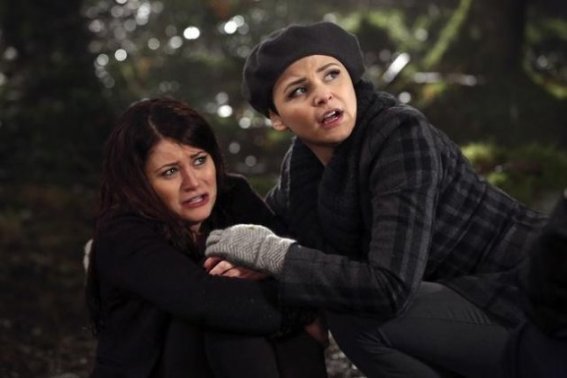
Back in the Fairy Tale World… First off, Henry was right. Dr. Frankenstein’s Monster is not a fairy tale. I’ve always considered it more of a horror story. I know some will disagree, but I’ve never been thrilled that they’ve incorporated this story into the show.
Read More >

All ‘Breaking Bad’ Things Must Come to a (Hopefully Good) End

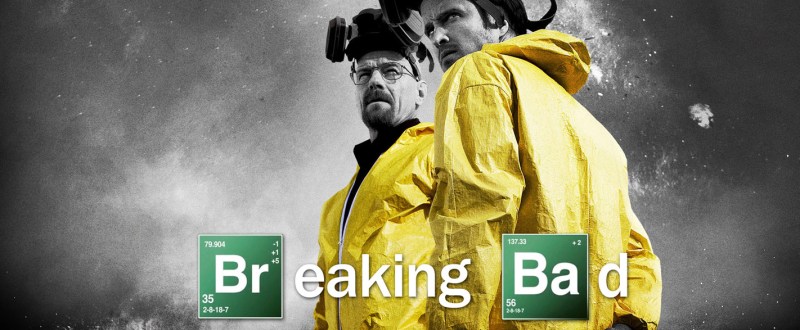
I love Breaking Bad. When I started watching it on Netflix I blew through all of the episodes in probably a week or two. Its intense and compelling story of meth cooking and drug dealing is itself a drug, and I’m an addict.

This is why I was so bummed when it didn’t win any Golden Globes this past weekend. Bryan Cranston, especially, I thought deserved to win best actor in a television drama series. Granted, I haven’t really watched Homeland (don’t kill me) or any of the other shows with actors up in this category except for Mad Men (and mm, Jon Hamm – I would have been okay with his beautiful mug winning too), but I still find it hard to imagine that anyone could have done anything better than Cranston’s gritty, complex, and oddly endearing performance.

With only half a season left, Breaking Bad is soon sadly coming to an end, but I think it is a testament to Vince Gilligan’s expertise at what he does that this series does have an end in mind. Rather than just trying to take the show as long as he possibly can, stringing us all along, it’s actually going somewhere. This is an important thing to keep in mind for anyone who is devising, writing, running, directing, or producing a television series. In the end, you don’t want to leave things hanging or bore your viewers with an aimless overarching narrative. Despite the serial nature of the medium, you still have to have a complete story and a conclusion in mind.

In this article Vince Gilligan discusses the difficulties of concluding the series. It’s definitely an interesting read. Let me know what you think of his comments and his process. How do you think it should end?

Ten Things on Vince Gilligan’s Mind As He Writes the Final Episodes of Breaking Bad
Denise Martin @ Vulture

130115-breakingbadarticle

We’re not gonna please everyone, we’re not gonna please everyone … This is what I keep telling myself so I can sleep at night,” Vince Gilligan laughed last month, even though he wasn’t exactly joking. When he spoke to Vulture, he was putting the finishing touches on the story for the third to last episode, getting very close to tackling the series finale (the show’s last stretch of eight episodes airs on AMC later this year).

Read More >

Last Night’s Midseason Premiere of ‘Elementary’

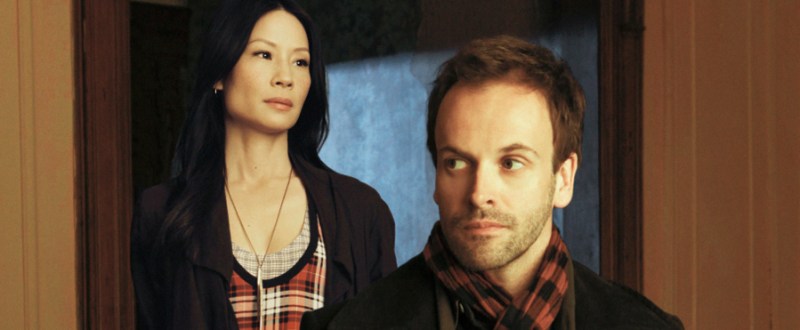
It was a unique idea–not the revamping Sherlock Holmes part, but the making Watson a woman part–but I’m not so sure how well it is working for the TV series Elementary. Although the midseason premiere that aired last night does finally seem to break the show out of its formulaic case-of-the-week mold, Lucy Liu’s performance as Watson still leaves much to be desired.

Jonny Lee Miller, on the other hand, plays a great Holmes. He’s the snide, self-absorbed, distinctively British genius we all want him to be. But the Watson-Holmes relationship is simply not as compelling as it is in Arthur Conan Doyle’s original creation. I don’t know if this is because of the gender dynamics (I hope to Odin they don’t end up trying to give them a romantic relationship–*gag*), or if the writing of their dialogue is just poorly done, or if Lucy Liu simply doesn’t have the capacity for the kind of humor required of the character. No matter the cause, Watson just falls flat and is a mere accessory to Holmes in this adaptation.

With all of the many versions of Sherlock Holmes out there, Elementary is definitely not at the top of the list. And especially after seeing Martin Freeman’s rendition of Bilbo–maybe the only saving grace of The Hobbit–I’m very tempted to start watching Sherlock, if only because I’m dying for a Dr. Watson who is anything more than bland and boring.

‘Elementary’ May Be Graduating to the Next Level
Liz Medendorp @ PopMatters

130111-elementaryarticle

“Observe and deduce” is his mantra. And the midseason premiere of Elementary reveals precisely how this directive applies not only to Sherlock Holmes (Jonny Lee Miller), but also to viewers at home. Upon entering a horrific crime scene, with all 12 pints of the victim’s blood pooled on the floor, the detective’s expression is peculiar, almost amused. The observant audience member might deduce that his response has special significance for him, that indeed, this is no ordinary crime scene.

Read More >