Changing the Game in Video Game Adaptation

Seeing as the video game industry has become so massive, with such hits as Activision’s Call of Duty: Black Ops 2, which grossed $1 billion in 15 days in December, and Modern Warfare, which sold $400 million in a single day in 2011, why is it that film adaptations of video games are so often flops? Especially in the wake of the dismal Silent Hill: Revelation, it seems that the studios producing such adaptations really need to rethink their approach.

Some of the only successful such adaptations include Lara Croft: Tomb Raider and the Resident Evil franchise, so perhaps the film industry should take notes from their example. In the article below, Resident Evil producer Jeremy Bolt, for example, said “When we developed the first screenplay, director Paul W.S. Anderson flew to Tokyo and spent a great deal of time with the game creators. We listened to their comments and respected their positions and that of the fans as much as we could. We see that as part of the success.”

So is that the key? True collaboration between the video game studio and the Hollywood studio? Well it’s certainly a start. It’s true that the video game creators know their fans much more intimately than the big-wigs in Hollywood. Ubisoft is taking this approach by putting together a complete package before proposing their projects to the studios, specifically by signing A-list stars (Michael Fassbender is slated to star in and produce Assassin’s Creed, and Tom Hardy is already attached to Splinter Cell).

But Prince of Persia showed that having A-list actors isn’t enough, as it failed to connect to audiences even with Jake Gyllenhaal as the star, and other recognizable actors such as Ben Kingsley and Alfred Molina in supporting roles. There must be more to it than that – in my opinion, the weakness of these adaptations is primarily in the story. There is a delicate balance between pandering to the preexisting fans of the video game and being accessible to a new, wider audience, and the best way to appeal to both is through a story that is new and exciting for the fans that can also stand alone as a solid movie in its own right. If you ask me, the producers of these adaptations need to put more stock in their screenwriters.

What do you think would make film adaptations of video games more successful? Are there any video games you’re dying to see made into movies?

Why Video Game Companies Are Taking More Control Over Their Movies
Tatiana Siegel @ The Hollywood Reporter

130118-videogamearticle

From books to plays to theme park rides, Hollywood has a long history of transforming successful intellectual properties into box-office hits.

But when it comes to video games, the track record is surprisingly dismal. Despite sales figures that have made film executives drool — Activision’s Call of Duty: Black Ops 2 grossed $1 billion in 15 days in December, and Modern Warfaresold $400 million in a single day in 2011 — only one film based on a video game, 2001’s Lara Croft: Tomb Raider, has ever crossed the $100 million threshold domestically ($131 million).
Read More >

Reviving ‘Arrested Development’

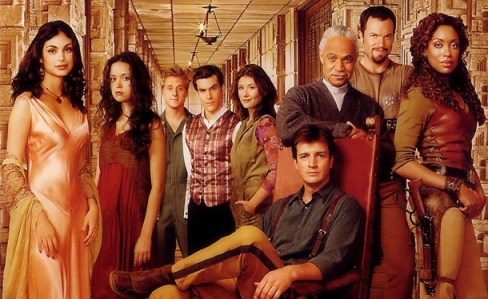
If you’ve seen Arrested Development, you know how undeniably amazing it is, and you may also know the frustration that many experienced when it was cancelled. It’s an old story: viewer meets show, show is amazing, show gets cancelled by (usually Fox) network because of small viewership without giving it time to grow, DVD sales and Netflix views bring show to larger audience, audience wants more! The quintessential example of this story comes in the form of Firefly, which did get revisited in the form of the film adaptation Serenity because of major fan activism and DVD sales.

130117-firefly

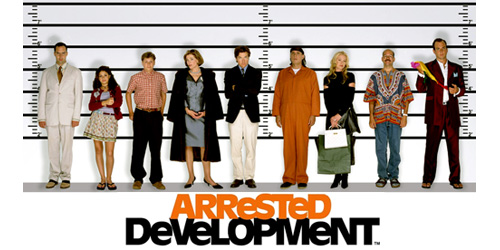
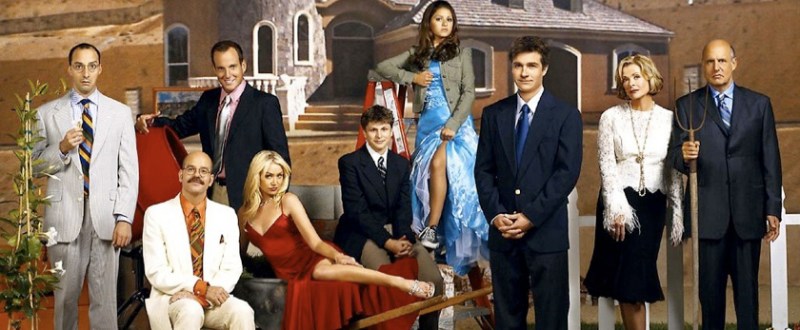
Yet Arrested Development is experiencing a revival the likes of which Firefly fans have only dreamed of: a whole 14 new episodes are being produced, all of which will be added to Netflix simultaneously. I can guarantee that I’ll be among the many viewers who binge watch the entire season in one day. The release is slated for May, with speculations of May 4th being the official date.

The complications involved in getting the actors back together while many of them have moved on to successful television (Will Arnett) and film (Jason Bateman, Michael Cera) careers and the fact that all of the episodes will be released at once has led to what looks to be a very interesting format to this so-called fourth “season” of the show, which will in fact look very little like a normal season. Check out this article about the uniqueness of this project, with comments from its star Jason Bateman and creator Mitch Hurwitz.

New ‘Arrested Development’: What to Expect
Ellen Gray @ PopMatters

130117-arresteddevelopmentarticle

The creator and cast of “Arrested Development” were reunited Wednesday at the Television Critics Association’s winter meetings in Pasadena with the people who’d (mostly) loved them before it was cool.

Or at least before millions more people discovered the show on DVD and decided that TV critics had, after all, been right about the series, which ran for three little-watched seasons on Fox between 2003 and 2006.

Read More >

Bad Guys are People Too

Constructing an antagonist is almost more complicated than creating your protagonist. Why? Because the audience has to believe that the bad guy has real motivations for their actions. No matter what atrocities they commit, the antagonist always has to believe that what they are doing is right.

The Avengers offers a great example of this in the character of Loki. As actor Tom Hiddleston said in an interview,

Well, I think he genuinely believes in his kind of motivation, which is that the human race is busy fighting each other. The planet Earth is rife with war and if the human race was united by the reverence of one king, he would create peace. It’s hopelessly deluded and misguided, but he’s also a character that’s also brought up with the expectation of his entitlement.”

So although Loki is incredibly misguided and is actually bringing about the destruction of the Earth, he truly in his heart believes that he is the hero of this story. And that’s the key – no one sees themselves as a villain, not even the actual villain of the story.

Not only does ensuring that your protagonist has a meaningful, even relatable or understandable motivation make him or her more realistic and believable, but it also makes them more complex, prompting the audience to be more  interested in the conflict with the protagonist.

Dexter is another great example of a “bad guy” with believable motivations – in fact, he isn’t even the antagonist. Somehow the writers on Dexter have managed to create a protagonist who, as a serial killer, is essentially a “villain”, yet the audience still roots for him every week. Check out this article discussing why and let me know what you think. What are some other examples of “bad guys” who have this sort of believable depth and motivation, arguably making them into possible “good guys”?

Specs & The City: Bad Guy Protagonist and ‘Dexter’
Brad Johnson @ Scriptmag

130116-dexterarticle

So you think that bad guys can only be Antagonists? Think again. They’re just as multi-faceted as the good guys these days. One day, when you least expect it, you’ll realize the script idea rolling around in that brain of yours is crying out to have a bad guy protagonist at the heart of the story. But how do you put someone like that at the center of your script and expect the audience to go along for the ride? Audiences like to cheer for the good guys, right? Actually, what they really like to cheer for is a character with whom they identify. On some level – any level – if the audience can catch a glimpse of themselves inside the character, then you’re golden.”

Read More >