‘Dredd’: An Under-Appreciated Adaptation

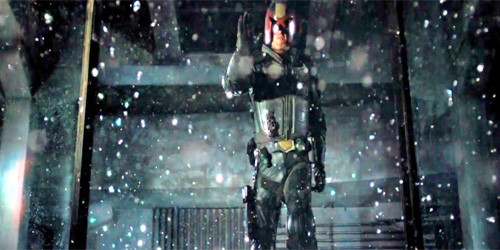
The British science fiction film Dredd, an adaptation of the comic book series Judge Dredd, with no relationship to the awful 1995 Sylvester Stallone film version, has unfortunately flown under the radar. With its DVD and Blu-ray release just two days ago, I hope that it may garner some more attention.

The setting of the film alone is incredibly intriguing–a dystopian future where most of Earth is too dangerous to inhabit because of high levels of radiation, so most of the world’s population is crammed into massive conglomerates of cities, rife with crime and violence. But beyond that, this film has some incredible action sequences, stunning and innovative visuals, and impeccable acting on the part of Karl Urban (Judge Dredd) and Lena Heady (Ma-Ma, a ruthless drug lord and gang leader).

So why is it that almost no one went to see this film? I, myself, didn’t even hear about it until I saw it on the local theater’s movie showtimes. I think this is a testament to the fact that promotion was far too limited here in the States for this great British film, but the article below discusses some of the added reasons why this under-appreciated film may simply not have what it takes to appeal to mainstream audiences.

Have you seen Dredd? Tell me what you thought of it!

Slow It Down and Violence Is Made Beautiful in ‘Dredd’
Liz Medendorp @ PopMatters
130110-dreddarticle

Dredd is a visually stunning, action-packed, and subtly funny British science fiction comic adaptation, yet it flew under the radar—only partly due to minimal promotion in the States. Beyond that, although Dredd admirably stays faithful to the spirit of the original comics, this approach in some ways limits the film’s appeal. With no epic narrative, no major growth in the protagonist, and a focus on the entrancing visuals rather than on plot or character development, Dredd is a great film that simply doesn’t fit the mainstream formula.”
Read More >

‘Deception’: Deceptively Intriguing

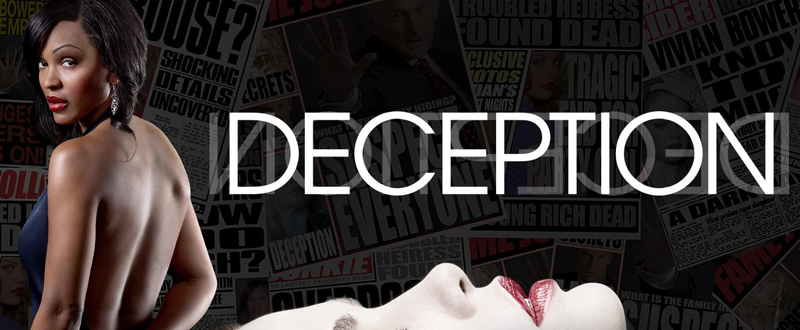
A new crime investigation show, Deception, premiered on NBC last night, and while the premise seems intriguing enough, I’m not sure how sustainable it will be.

After the scandal of a young socialite’s death, the intrigue of this show centers around the dark secrets of her distinguished family and the tense, complex relationships between them. Deception then deceives us into thinking it is a show about solving a murder, hooking the viewer with a “whodunit”-type mystery, but in fact reveals itself to be more about the characters—exploring their relationships and inner struggles. While the members of this wealthy family could very easily come off as one-dimensional, the secrets they hide give these archetypal rich snobs a certain depth that makes them both intriguing and believable.

However, if the pilot is any indication as to the style of the show, most of the action seems to happen in the past. As secrets continue to be uncovered and as memories begin to resurface, flashbacks are (almost over-)used to help illustrate them. In the present, then, we find the characters spending most of their time simply talking about the past. Granted, as a pilot this episode does have to deal with a lot of exposition, but, especially seeing as this show is so character-driven, it would be all too easy to let action fall by the wayside. To be sure, a lot of action is not necessarily vital to maintaining interest if the characters are compelling enough, as they seem to potentially be, but a focus on the past can keep the story from moving forward.

The pilot then begs the question: where can you go with this? The complex relationships and the many skeletons in the Bowers family closet will certainly provide enough material to last at least until the end of the season, but at some point the murder will have to be solved, thus ending the investigation. While the family’s laundry list of secrets certainly appears to be never-ending, it is doubtful that they could carry the show through multiple seasons. If Deception hopes to have a long life, then, it will have to do more. Especially if it stays mired in the past and the secrets to be found there, the series won’t be able to move into the future.

Did you catch the premiere? Tell me what you thought.

Meagan Good Goes Undercover in ‘Deception’
Liz Medendorp @ PopMatters

130108-deceptionarticle

It opens like a standard crime investigation show: late at night, a shadowy figure follows a young woman to her car; by morning, she’s dead. But Deception isn’t just another crime procedural, as it seems to be. Instead, it’s another investigation of the dark secrets of the wealthy, who have a lot to hide.”

Read More >

The Deadly Formulaic Procedural

Procedural shows are, by definition, formulaic. They require each episode to be pretty much self-contained, and rather than have long-format story arcs over the course of a season or longer, each week contains another cookie-cutter story.

I get super bored with procedurals. Really fast.

Following the same formula every week is extremely repetitive and – even worse – predictable. A lot of times procedurals start to fail when the viewers learn to predict the end of the episode shortly after it has even begun. Sure, if the particular case at hand that week is especially interesting, they’ll still keep watching, but they know what is going to happen anyway.

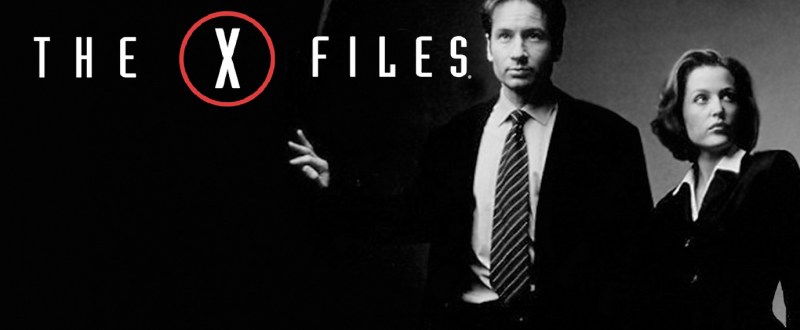
Most procedurals deal with law enforcement agents, doctors, or courts. One great example of (a good) procedural is The X-Files, which had a different paranormal phenomenon to be investigated and solved every week. The important thing, though, is that it had more than just stand-alone, self-contained episodes. Instead, it combined its case-of-the-week with an overarching plotline of mystery, corruption, and intrigue. Beyond that, it is the characters that carried this long-format narrative. Without Mulder and Scully, you have no X-Files (as evidenced by how absolutely dreadful the series became in the later seasons).

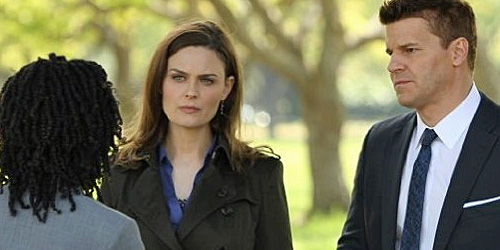
Despite the sense that procedurals are destined to die, it is entirely possible to write a great one. This PopMatters article uses the example of Bones to discuss the need for strong characters in procedurals in order for them to be successful. This is a key concept for television writers to take into consideration.

The Bones in Every Procedural TV Show, Including ‘Bones’, Are the Characters Themselves
Liz Medendorp @ PopMatters

130106-bonesarticle

I hate procedurals, but I love Bones. The compelling characters keep the audience engaged despite the formulaic format, but some episodes fall flat… This is something that all procedurals should take note of: it isn’t the new medical mystery or supernatural event or bizarre murder every week that keeps bringing us back, it’s the characters.”

Read more >